
For weeks, our mornings started the same way.
Two adult magpies would land in the yard and call out. Then, a fluffy young magpie would appear, a bit unsteady, begging for food and practising short flights. We started to look out for them. It became a small ritual in the middle of everything else going on.
The parents looked healthy. The chick looked… chaotic, but in that normal baby-bird way. Clumsy, loud, and very sure that every moment was feeding time.
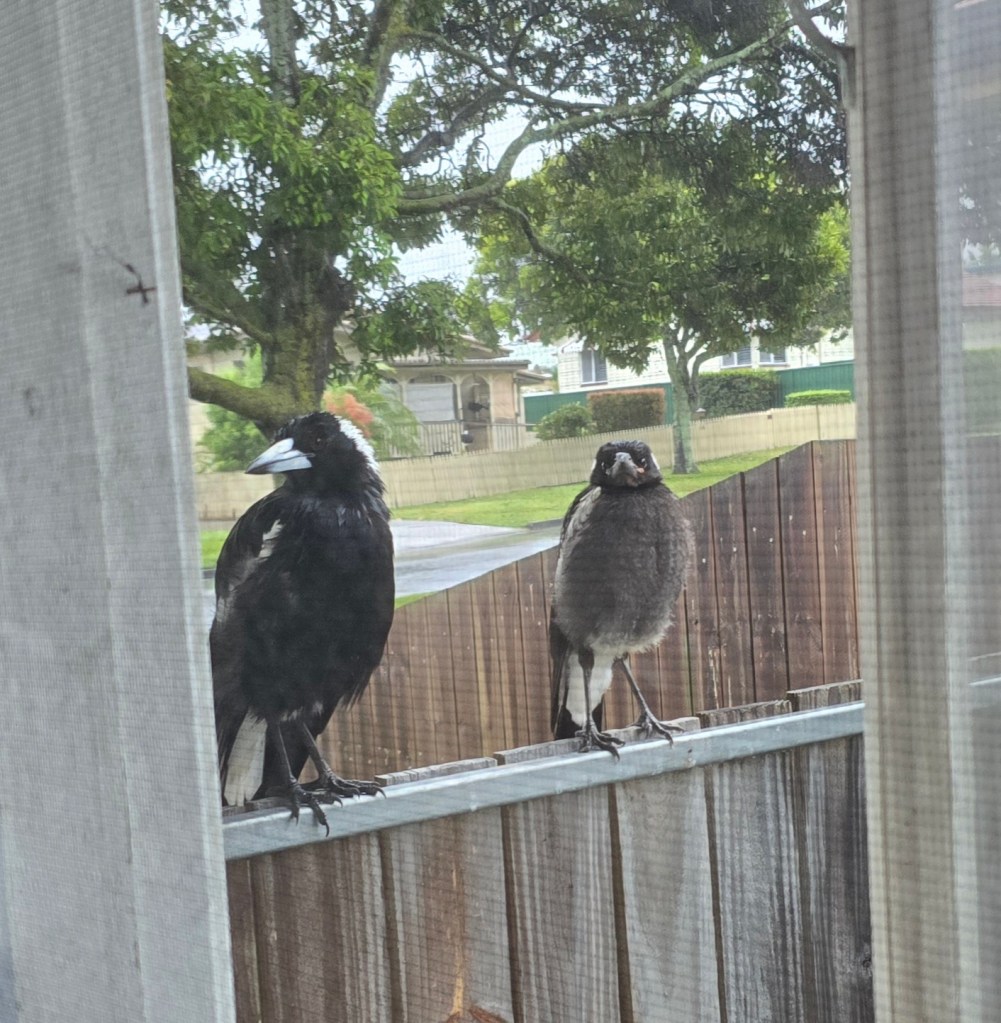
Then one day, the parents came without the chick.
When the Routine Suddenly Changes
At first, I tried not to overthink it.
Maybe the chick was exploring somewhere else. Maybe it had followed another bird. Maybe this was just a normal part of magpie development that I didn’t understand.
But the next day, it was the same. Parents in the yard. No chick.
I noticed something else, too. The father had an injured foot. He was still getting around, still turning up, but clearly not at full strength.
The story in my head started to shift. Injured parent. Missing chick. This wasn’t just a change in routine. Something had gone wrong.
Grief Over “Just a Bird”
On paper, it’s a small thing.
A wild bird. A short life. Nature doing what nature does.
But when you’ve watched a tiny creature turn up every day, be fed, trained, and guarded… it doesn’t feel small. You notice the gap. You notice the parents still arriving, still calling, but with one less bird to protect.
It hit harder than I expected. Not in a dramatic, life-altering way. More like a quiet punch to the chest that caught me off guard.
Part of me wanted to minimise it:
- “It’s just a bird.”
- “This happens all the time.”
- “You’re being too sensitive.”
Another part of me knew that wasn’t honest. The attachment was real. Brushing it off wouldn’t make it less so.
What the Magpies Taught Me
Sitting with it for a bit, a few things landed (no pun intended):
- Attachment doesn’t need permission.
You don’t only get to feel sad over “big” losses. The brain doesn’t run a checklist first. If you’ve built a small connection, you feel it when it breaks. - We notice patterns more than we realise.
We didn’t think of “magpie feeding time” as an important part of the day. But when it changed, it cut through the noise of work and routine. Sometimes it’s the quiet, repeated things that anchor us. - Caring costs something.
It’s easy to say, “I love that we have wildlife around the house.” It’s harder to admit that caring, even about small lives, comes with a risk: you might lose them. The same is true with people, pets, and even jobs. - Not all problems are fixable.
My work brain is used to asking: “What can we do? What’s the process? What’s the plan?”
Here, there was nothing to fix. No form to lodge. No mitigation strategy. Just a bird under a tree and two parents still showing up.
Making Space for Small Griefs
We talk a lot about “big” grief: death of loved ones, relationship breakdowns, major life changes.
We talk less about the small, quiet losses that still leave a mark:
- A routine that stops.
- A pet that dies.
- A bird that doesn’t come back.
- A version of your day that no longer exists.
These small griefs matter because they stack. If you’re already carrying stress, workload, conflict, and change, one more little loss can tip you into feeling flat, numb, or unreasonably teary over “nothing”.
The answer isn’t to shame yourself for feeling it. It’s to acknowledge it:
“Yeah, that did hurt. And that’s okay.”
Sometimes naming the feeling is enough.
What I’m Taking From This
The magpies haven’t stopped visiting. The parents still fly in. The injured foot is still there. The yard is a little quieter without the chick.
Here’s what I’m trying to hold onto:
- It’s okay to care about “small” things and to be moved when they end.
- Being busy doesn’t cancel out the need to pause and feel.
- Not every loss needs a lesson, but noticing what it stirs up can still be useful.
This month, a baby magpie died, and it made me unexpectedly sad.
I’m not going to apologise for that. If anything, I’m taking it as a sign that, under all the busyness and emotional labour, there’s still a part of me that is paying attention.
 What did you learn?