

Have you ever faced a situation at work where something felt “off,” but you weren’t quite sure how to tackle it?
Maybe a new hire isn’t meeting expectations, but you’re unsure whether to address it, let it go, or terminate the contract.
This is exactly the kind of ambiguity where structured problem solving becomes invaluable.
In this post, I’ll walk you through a real-world HR example — managing an employee disciplinary issue during probation — using a proven 7-step framework from McKinsey & Company. It’s the same method consultants use to break down billion-dollar business problems. But here, we’ll use it to solve a practical challenge many people managers face.
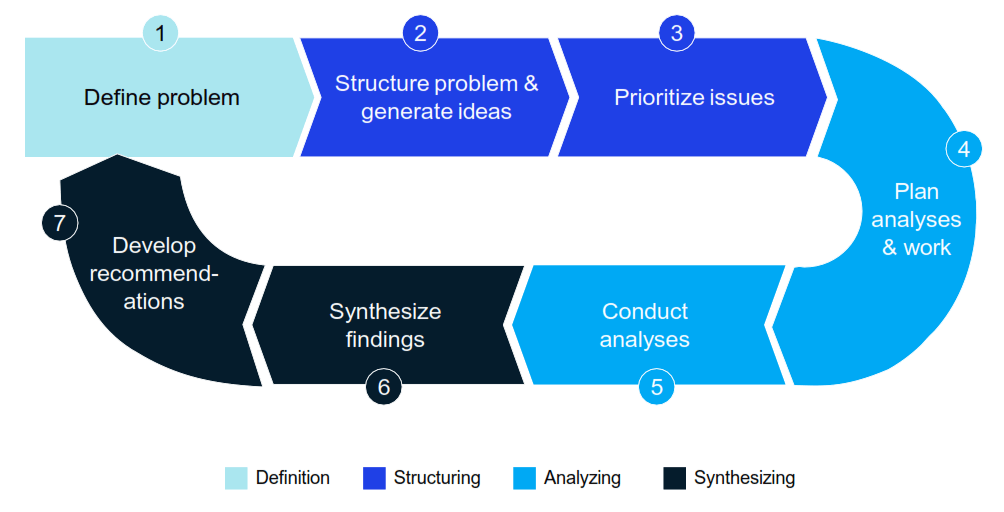
👣 Step 1: Define the Problem Clearly
Let’s say a new employee, James, is three months into his six-month probation. His work has been inconsistent, he’s made repeated data entry errors, and there have been some missed deadlines. His manager is frustrated but hasn’t had any formal conversations with him yet.
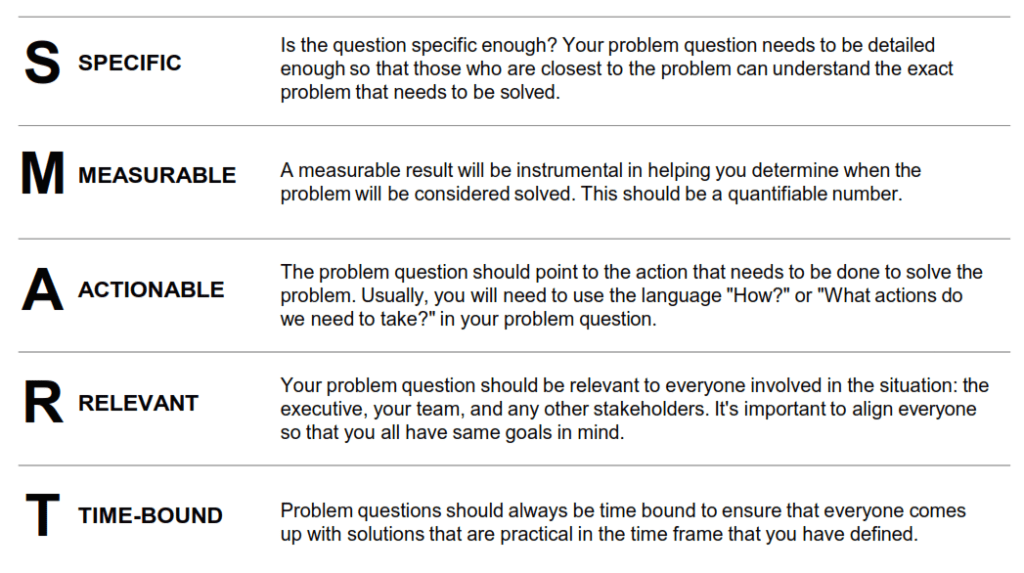
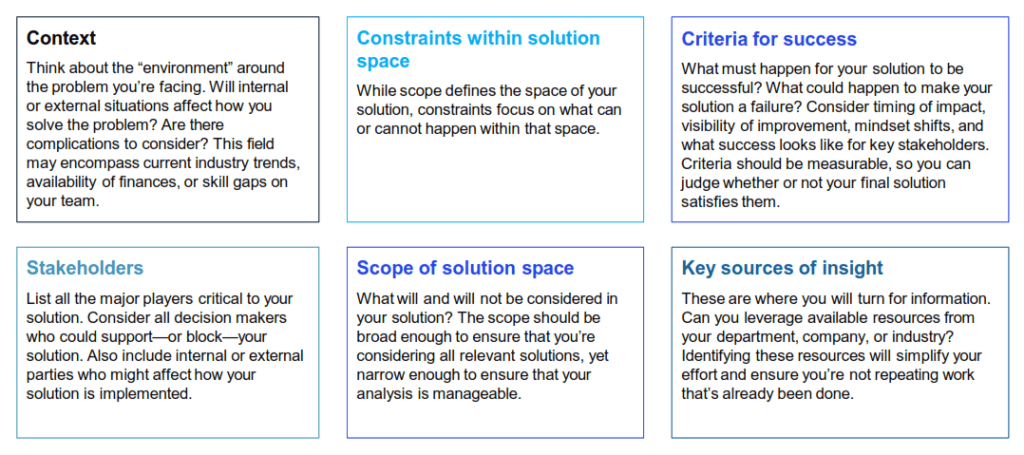
Instead of jumping straight to performance management or termination, we start by defining the problem using the SMART method.
🧾 Problem Statement Example:
How can we address performance concerns with James during probation in a way that is fair, compliant, and gives him a chance to improve — within the remaining 3 months?
This gives us clarity:
- Specific: It’s about James’ performance.
- Measurable: Based on error rate, deadlines, improvement actions.
- Actionable: Leads to clear steps (feedback, support, decision).
- Relevant: Affects team productivity and morale.
- Time-bound: Needs resolution within probation period.
🧱 Step 2: Structure the Problem
We now break the challenge into smaller, manageable issues — a process often called creating an “issue tree.”
Main question: How can we address performance concerns with James?
Branch A: Is there clarity on expectations?
- A1. Were expectations clearly communicated during onboarding?
- A2. Has feedback been given regularly?
Branch B: Is support in place?
- B1. Does James have the tools and training needed?
- B2. Are errors due to system/process gaps?
Branch C: What actions are appropriate?
- C1. Is a performance improvement plan (PIP) suitable during probation?
- C2. Is termination a compliant and fair option?
✅ Step 3: Prioritise What Matters
We plot these issues on a simple 2×2 matrix: Impact vs Feasibility.
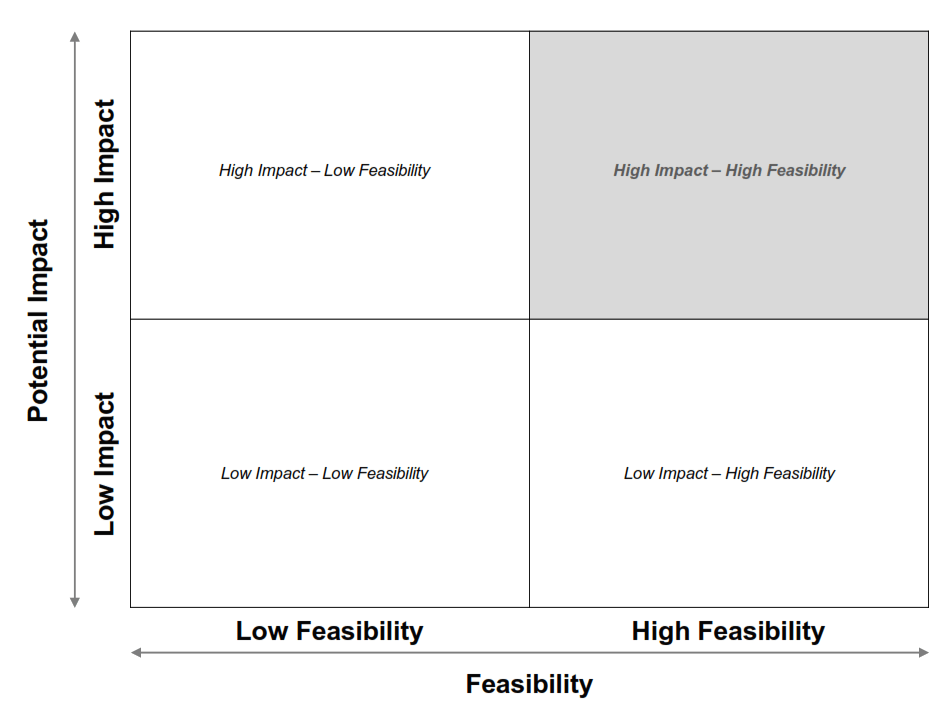
Top-right quadrant (High Impact, High Feasibility) is what we will focus on:
- Clarify if expectations have been communicated (A1)
- Check whether regular feedback has been provided (A2)
- Assess if James has the right tools and training (B1)
These become our immediate focus areas.
📊 Step 4: Plan the Analysis
We now create a simple work plan:
| Issue | Hypothesis | Analysis | Sources | Owner |
|---|---|---|---|---|
| A1 | Expectations were not clearly communicated | Review onboarding checklist, initial JD, and induction notes | HR records, manager’s onboarding plan | HRBP |
| A2 | Feedback has been vague or informal | Interview manager, check 1:1 records | Calendar, email, 1:1 docs | HRBP |
| B1 | Training gaps exist | Compare training attended vs required tasks | LMS records, team processes | Manager |
🔍 Step 5: Conduct the Analysis
The manager confirms:
- James was shown the systems but not given structured training.
- Feedback was mostly verbal and not documented.
- No formal expectations were ever shared post-induction.
Bingo. Now we’re getting somewhere.
🧠 Step 6: Synthesise the Findings
Insight:
James has not been set up for success. There was no clear onboarding plan, no documented expectations, and limited feedback.
Implication:
Before performance can be formally managed, we need to provide James with the clarity and support he should have received from the beginning.
🗣️ Step 7: Recommend a Way Forward
The recommendation isn’t to fire James — at least not yet. Instead:
- Clearly document expectations and re-issue the role requirements
- Provide structured training for his core tasks
- Implement a 4-week support plan with weekly check-ins
- Reassess at Week 4 to determine suitability for continuation or termination
This is documented, fair, and supports both the employee and the business.
🔚 Final Thoughts
Too often, people managers jump from frustration to formal action — skipping clarity, context, and coaching. Structured problem solving gives you a roadmap.
It’s not about overcomplicating things. It’s about thinking clearly under pressure and avoiding decisions based on emotion or assumption.
Try it yourself. My biggest learning from this process is that we often fail to clearly define the problem. Don’t solve a bigger problem than required and don’t forget the needs and priorities of the people we are solving the problem for.
 What did you learn?